The technique
Not pigment imitating a hair. A fibre.
Aesthetic fibres applied one by one, at 0.3 mm, on your client's skin. Volume with texture and relief, reversible, nothing permanent.
what happens in the chair
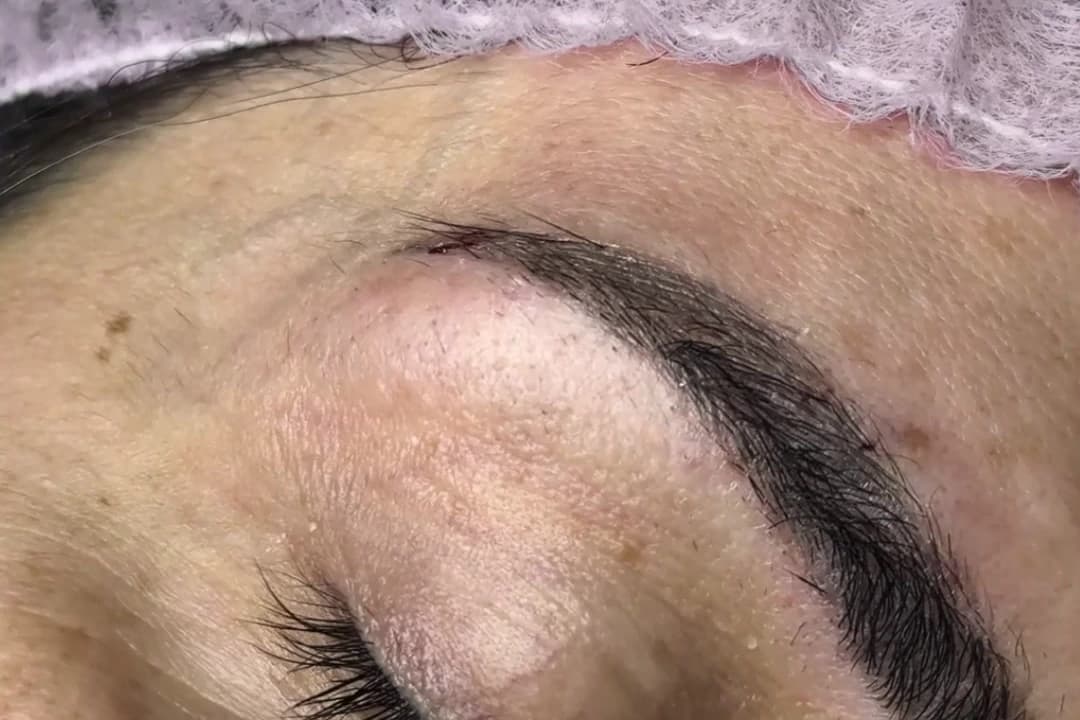
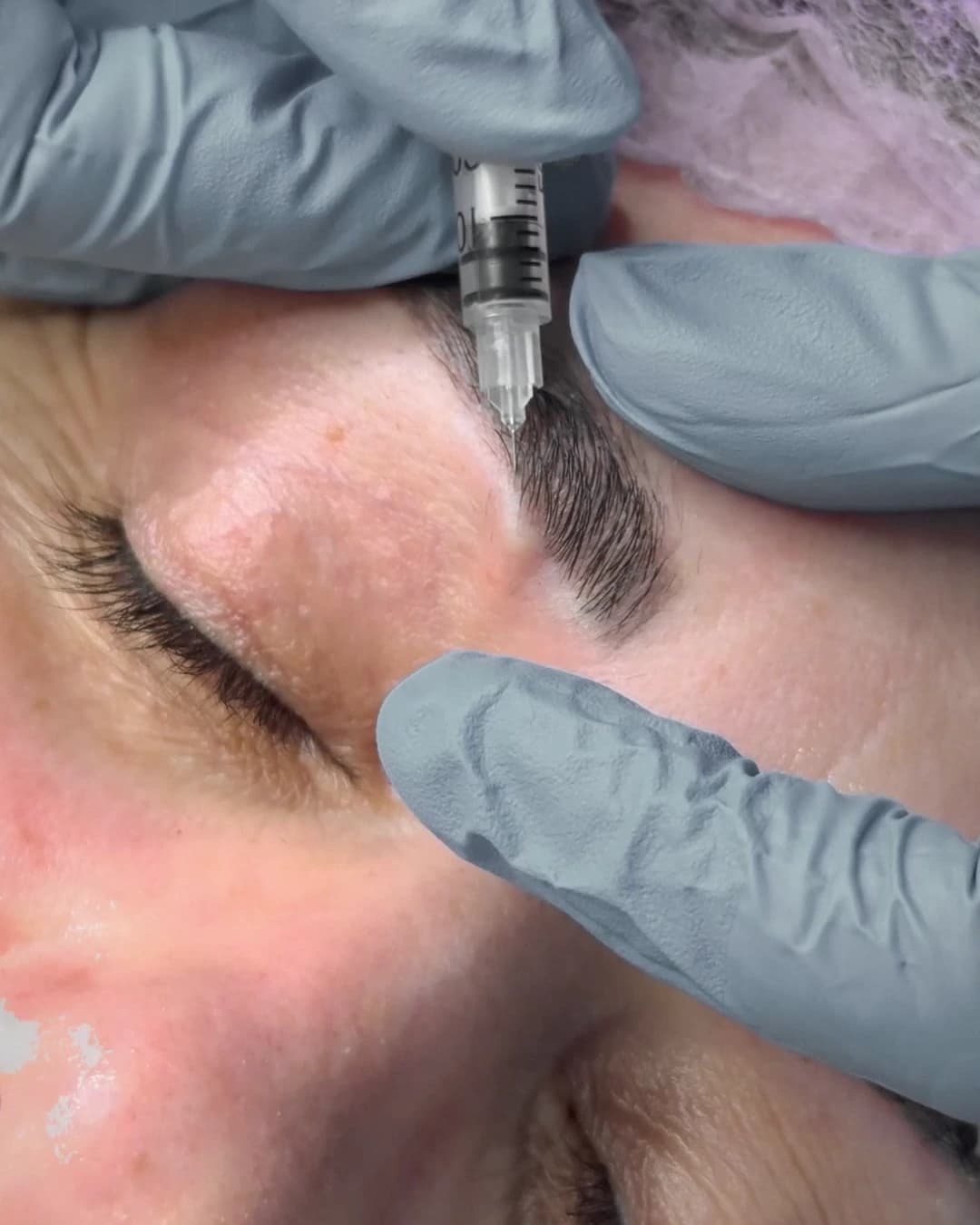
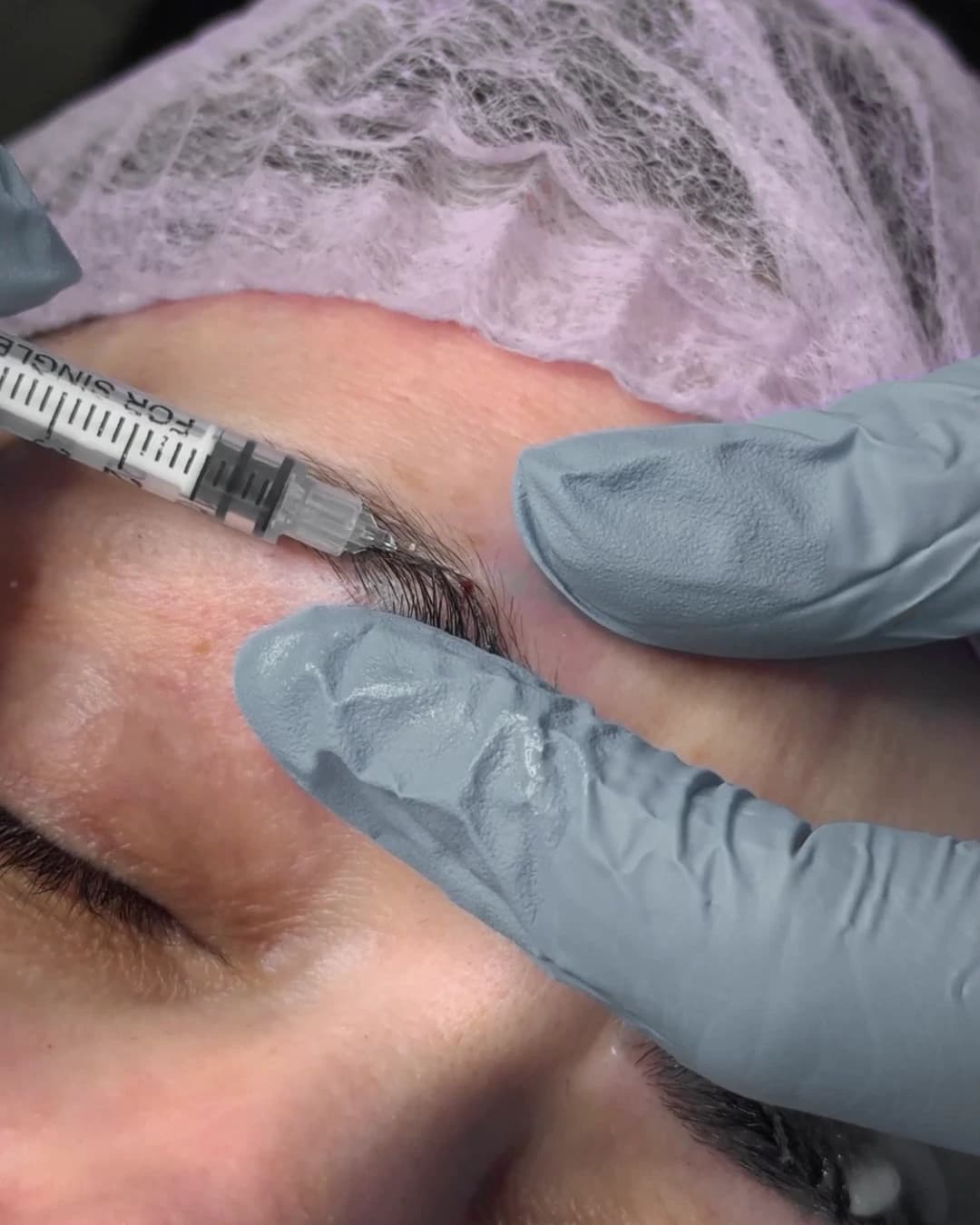
The professional applies biocompatible aesthetic fibres, made of polybutylene terephthalate, following the natural line of the eyebrow. One by one.
The needle is a nano-needle, close in gauge to an insulin needle. It is not a surgical needle. It enters 0.3 mm, which leaves it in the epidermis and upper dermis, above where microblading works.
Topical anaesthetic is applied. Clients describe the discomfort as well below that of permanent make-up.
The fibre is sterile, single-use, non-toxic and non-absorbable. Laboratory produced, purified, dermatologically tested.
what changes compared with what you already do
Compared with permanent make-up
Microblading and nanoblading draw. They deposit pigment in the skin and create a stroke that, seen head-on, reads as a hair.
FiberBrow adds matter. The fibre occupies space above the skin, so it has texture and catches light the way a real hair does. The difference shows up close and in side-on photography, which is where permanent make-up usually gives away that it is a drawing.
Aftercare is simpler. There is no pigment healing over weeks and no uncertainty about the final colour once it settles.
And there is the client neither of the two serves: the one who wants volume in her brow and says she wants nothing permanent on her face. Today that person leaves your clinic without booking. She is the one FiberBrow answers.
None of this replaces what you already offer. It adds.
how long it lasts, the whole truth
The result holds for three to six months. Touch-ups every four to six.
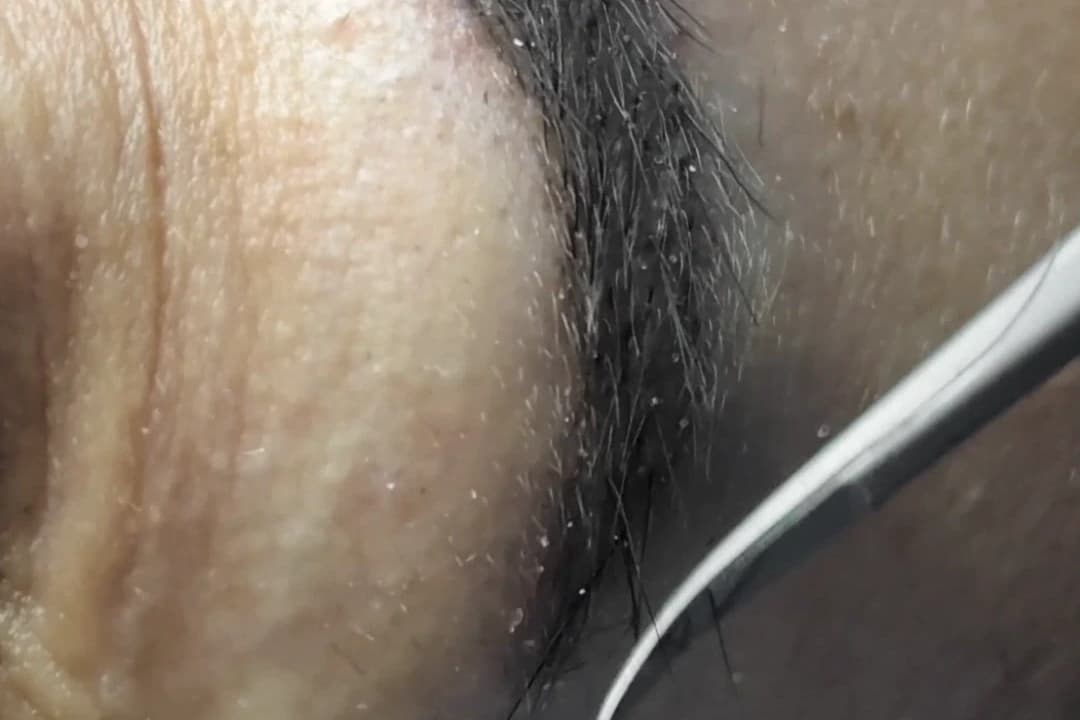
Put like that it sounds short next to the two years of permanent make-up. Seen from the perspective of running a clinic, it is something else: the client comes back to your diary three or four times a year, instead of once every two years.
With regular maintenance the result holds for as long as she wants. The technique has no expiry. It has a rhythm.
Duration is shortened by inflamed skin, by the client's lifestyle, and by incorrect application depth. The third one is down to whoever applies it.
it is reversible, and that is a selling point
The material can be removed whenever the client decides. No waiting for it to fade, no laser, no living with regret for two years.
For a proportion of the clients who hesitate at the door of permanent make-up, this is what unlocks the decision. It is not that FiberBrow lasts less. It is that you can go back.
what it is not
It is not a surgical procedure. It does not harvest follicles, does not require general anaesthetic, and does not reach deep skin structures.
It is not an eyebrow transplant. A transplant moves the person's own hair, is a medical act, and costs between seven and thirty thousand euros. This is an aesthetic facial technique with no therapeutic purpose, at a fraction of that.
It is not a tattoo and it is not permanent make-up. No pigment is introduced into the skin.
It does not require a doctor. It requires an aesthetics professional trained and certified in the method, which is why the certification exists.
where it does not apply
It is contraindicated in cases of known allergy to nickel or to aesthetic materials, pregnancy, breastfeeding, active autoimmune disease, and isotretinoin use. These are the same contraindications as for permanent make-up.
There is a natural sensitivity margin of between three and five per cent, as with any aesthetic material. For clients with an allergic history, a tolerance test beforehand is recommended.
The two serious problems come from execution: double application and unsterilised fibre. Neither is a property of the technique. Both belong to whoever applies it without training.
questions your clients will ask
Can I use henna afterwards?
Yes. The fibre has a sealed finish and does not take up dye. Henna colours the natural hairs and the fibre keeps its original colour.
Does it hurt?
Less than permanent make-up and less than microneedling. Topical anaesthetic is applied regardless.
Is it permanent?
No. It lasts three to six months and can be removed sooner if you want.
Is it safe?
With a rigorous protocol, yes. The fibre is biocompatible with the great majority of skin types. The sensitivity margin is three to five per cent.
Will it damage my own hairs?
No. The application preserves the integrity of the natural hairs.
the regulatory position, for those who need it
This part matters to whoever runs a clinic and has to answer to an inspector, an insurer or a business partner.
The technique does not introduce pigment into the skin, so Regulation (EU) 2020/2081 on tattoo inks does not apply. That regulation defines its scope as the injection or introduction of mixtures into the skin, and that is not what happens here.
A necessary caveat, and it is the reason this page differs from the other three. That regulation is European Union law. Switzerland is not in the European Union, and neither are several other countries whose professionals read this page. If you are outside the EU, the position above tells you nothing about your own jurisdiction, and we would rather say so than let you assume otherwise.
The technique pierces the skin at 0.3 mm. What that means for you depends entirely on where you practise. In some countries the rules are national; in others, such as Spain, they are set region by region, and there are seventeen of them. In Italy, any treatment performed on the surface of the body requires the aesthetician qualification regardless of whether it pierces the skin.
We are not going to give you a single European answer, because there is not one. What we can tell you is exactly what the technique does, which is what your regulator will ask.
This is sourced information, not legal advice.
The technique is learned in two days
The training is in person, with practice on a live model, and you leave with the method and the kit.